Introduction
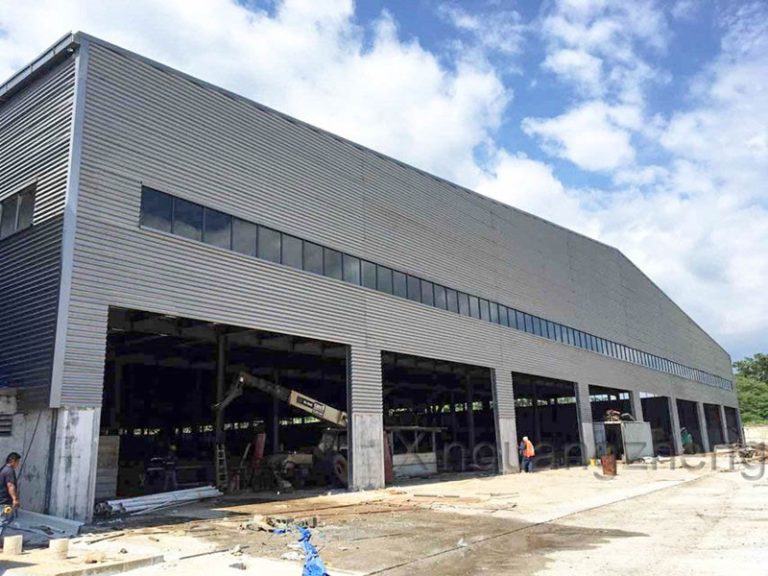
In 2026, pre-engineered steel buildings (PEBs) will continue to drive the way of industrial and commercial buildings. Due to lower costs, ease of construction, higher design flexibility and also environmental benefits, PEBs are being chosen more and more by investors, manufacturers like XINGUANGZHENG and developers. Where in some cases, using PEBs can save several months in construction time and at the same time, provide the most safe and robust structures.
A pre-engineered steel building acts as a factory-designed and pre-built structure. Each part, such as columns, beams, and joints, gets careful planning for specific loads, spans, and site requirements before shipping. Unlike typical concrete or brick approaches, PEBs are made in controlled factory conditions. Then, teams put them together on site, just like a detailed kit.
They are preferred three main reasons. First they construct faster than other construction types. Second, they can benefit from ecological designs with the use of materials which can be recycled, insulating materials which reduce energy consumption. They are suitable for all sizes ranging from small shopping marts up to the hypermarkets.
What Exactly Is a Pre-Engineered Steel Building?
A pre-engineered steel building (PEB) consists of several essential components:
- Primary framing: Rigid frames consisting of columns and rafter beams that bear the primary structural loads.
- Secondary members: Purlins, girts, eave struts, and bracing elements that provide additional support and lateral stability.
- Roofing and wall cladding: Profiled metal sheets or insulated sandwich panels that form the weatherproof envelope.
- Bracing systems: Diagonal or portal bracing to resist wind, seismic, and other lateral forces.
- Accessories: High-strength bolts, fasteners, gutters, downspouts, ventilators, and flashings.
The core structure consists of the following materials: steel columns, rafter beams, wind resistant columns (if required), roof & wall purlins, gutters & crane beams. The parts are used for broad clear-span layouts and most of the time the structures will be wide span without any interior columns. Wide span structures most of the time exceed 60 meters therefore PEBs are ideal for warehouses, factories and aircraft hangars.
Unlike traditional on-site built steel structures, which need custom plans and heavy fieldwork for every job, PEBs rely on special software to design and refine each part ahead. This often cuts steel use by as much as 30%. All pieces come pre-cut, pre-drilled, and marked at the factory. Thus, they permit smooth bolted fitting on site.
Our Pre-Engineered Buildings (PEB) design is compliant with all international design codes, such as AISC (American Institute of Steel Construction), MBMA (Metal Building Manufacturers Association) and ASCE 7-22 with updated 2026 Wind, Snow and Seismic load provisions.
Key Advantages of Pre-Engineered Steel Buildings
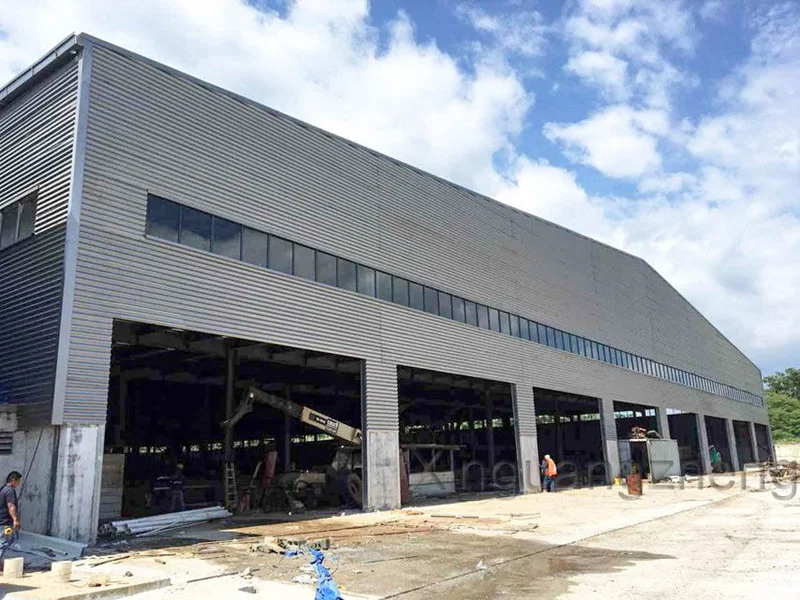
- Cost-effective:Reduced material waste and labor costs make PEBs significantly cheaper per square foot than concrete or masonry structures.
- Quick erection:Construction can be completed in weeks rather than months since most fabrication happens off-site.
- Clear-span flexibility:Capable of achieving spans over 100 meters without interior supports—perfect for logistics hubs or sports arenas.
- Durability & low maintenance:Galvanized or coated steel resists corrosion even in coastal climates.
- Energy efficiency & sustainability:Insulated sandwich panels improve thermal performance while all-steel components are recyclable—meeting LEED targets easily.
- Customization:Designs can include mezzanines, cranes, skylights, or ventilation systems tailored for industrial or commercial use.
More structural strength, less weight, greater durability, and also earthquake resistant, that is why residential steel structures outperform traditional brick-and-timber or concrete residential buildings. In many seismic zones, where residential steel buildings have become the norm, because the authorities too enforce PEB standards.
Common Applications in Industrial & Commercial Projects
Pre-engineered steel buildings serve across sectors:
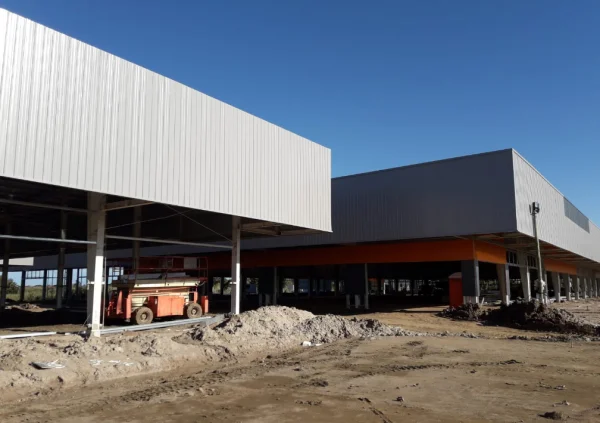
- Warehouses & distribution centers– fast setup with large open interiors for racking systems; XINGUANGZHENG’s warehouse projects in Malawi (4,500 m² + 5,000 m²) highlight this efficiency.
- Manufacturing plants & factories– from Ethiopia’s garment factory (100,000 m²) to Algeria’s brick plant (over 13,000 m²).
- Workshops & equipment storage– modular layouts allow easy crane integration and future expansion.
- Commercial facilities:supermarkets in Maldives and Angola; aircraft hangars in Australia; showrooms like Audi’s 4S shop in Uruguay—all built using PEB technology.
Our business covers more than 100 countries on 6 continents. This global experience proves how adaptable PEBs are across climates—from humid tropics to arid deserts.
How Pre-Engineered Steel Buildings Are Designed & Manufactured
The design process starts with the client information such as size and use of the building and local wind, snow and seismic design criteria. This information is entered into advanced structural analysis software. The analysis software can perform load calculations, component design and fabrication drawings.
Manufacturing is carried out in highly advanced plants equipped with CNC cutting tools, robotic welding machines and precision measuring and testing equipment to the accuracy of millimeters. Major manufacturers conform to internationally recognized standards including those of the USA and Europe.
Quality checks include strict ISO-approved steps, weld tests without damage, and complete reviews before packing and worldwide delivery. For instance, XINGUANGZHENG has earned strong scores in global reviews, including AISC approval with no issues. This shows commitment to the top worldwide standards.
XINGUANGZHENG, a Chinese company like many others has the advantage of large scale production. They have 6 production plants with many production lines. They have a complex logistics and supplier network which ensures low costs and quality for the projects they undertake abroad.
Installation Process Step-by-Step
- Site preparation & foundation:Concrete foundations are cast according to anchor bolt layouts provided by engineers.
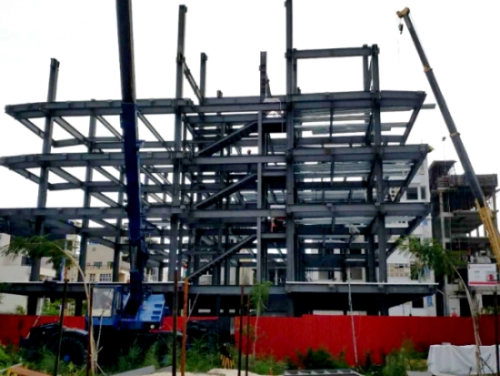
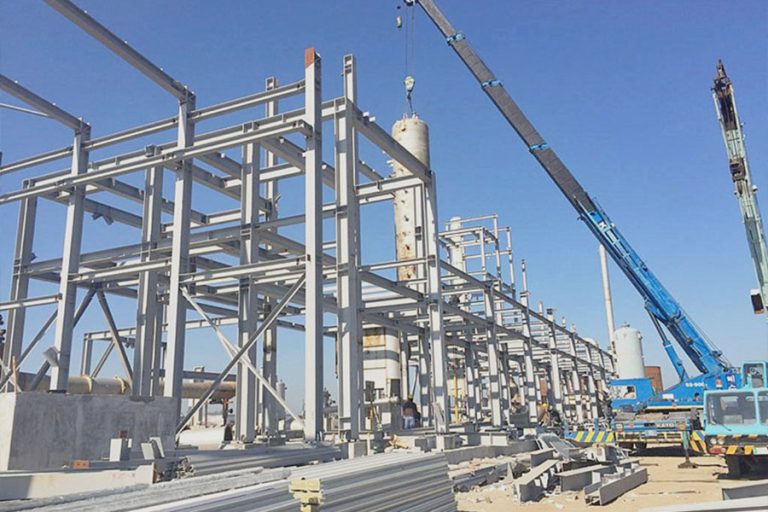
- Delivery & assembly:Prefabricated parts arrive labeled; erection teams bolt them together using cranes.
- Roofing & wall installation:Panels or insulated boards are fixed next; accessories like gutters or ventilators follow.
- Turnkey options:Companies such as XINGUANGZHENG offer one-stop service—from design to handover—reducing coordination headaches between multiple contractors.
We provide one-stop service, reduce the effort and time of multi-enterprise coordination.
Cost Overview in 2026
Pricing varies depending on size and specifications. But for a basic shell structure expect to pay in the range of $25–$45 per sq. ft. Insulated walls, or a turnkey finish package, may be a little more expensive.
Factors affecting price include span width, insulation type (PU vs rock wool), local labor rates, crane requirements, façade materials like glass curtain walls or aluminum panels—as seen in Algeria’s drug warehouse project covering 9 776 m².
Comparison: PEB vs Traditional Construction
| Feature | Pre Engineered Steel Building | Traditional Construction |
| Construction Time | Weeks | Months |
| Cost Efficiency | Lower material/labor | Higher due to wet works |
| Span Flexibility | Up to 100 m clear span | Limited by columns |
| Sustainability | Recyclable materials | High waste generation |
| Maintenance | Minimal | Frequent repairs |
PEBs clearly outperform conventional methods when time-to-market matters—a critical factor for manufacturers scaling operations quickly.
Conclusion
Pre engineered steel buildings are characterized with a combination of great engineering, convenience and eco-friendliness. This category of buildings has the benefit of less time consumed for project completion, lowest construction costs, resistance to different climatic conditions and above all full support to the objectives of green building worldwide.
The majority of reliable makers, including XINGUANGZHENG, whose products have been exported to over 100 countries in six continents and are equipped with corresponding certification such as AISC and EAC. Makers are trying to push pre-engineered steel buildings to more and more heavy and complex industrial use cases. If you are interested in getting custom designs, drawings or quotation for your upcoming warehouse, factory or commercial buildings project, welcome to get in touch with XINGUANGZHENG team.
FAQs
Q1: What is the main difference between a pre-engineered steel building and a conventional steel building?
A: A pre-engineered steel building uses standardized designs optimized through software before fabrication; components arrive ready-to-install on-site—unlike conventional structures requiring extensive cutting and welding during construction.
Q2: How long does it take to build a steel building?
A: erection times for most pre-engineered steel buildings can vary but generally they can be erected in a period of between 8 weeks and 4 weeks depending on size and design. It is worth noting that structures of concrete would take many months to be completed.
Q3: Are pre-engineered steel buildings suitable for high-wind or seismic areas?
A: Yes. Modern PEBs follow ASCE 7 22 wind/seismic codes; their ductile frames dissipate energy efficiently during earthquakes while bracing systems resist lateral forces effectively.
Q4: How long will the average life of a PEB structure be?
A: Up to 100 years with regular maintenance including repainting of structures as and when required.
Q5: Can pre-engineered buildings be expanded in the future?
A: Yes. Pre-engineered buildings are modular and additional bays can be added in the longitudinal direction in the future without any disturbance to the on-going operations which is a great advantage over reinforced concrete structures where expansion of existing plant requires large areas for new structures thus affecting the on-going production considerably.