Buying a prefabricated steel building for an overseas project involves more than comparing floor area and price. Procurement teams need to align the project brief, drawings, materials, quality records, delivery scope, local responsibilities, and installation support before production starts. If one item remains unclear, it can lead to redesign, extra local cost, shipment delays, or site rework.
This checklist is for buyers who already understand pre-engineered steel buildings and now need a practical purchasing control process.
What Must Be Confirmed Before a Prefabricated Steel Building Order Is Released?
Freeze the Project Use, Dimensions, Interfaces, and Major Requirements
The first procurement gate is to make sure everyone is pricing the same building. Confirm the intended use, length and width, clear height, roof form, openings, access points, internal equipment, crane interfaces, enclosure needs, and possible future expansion.
Before approving an order, check:
1. Building use and operating process
2. Main dimensions and clearances
3. Doors, windows, mezzanines, and equipment openings
4. Crane or suspended-load requirements, if applicable
5. Roof, wall, insulation, and ventilation needs
6. Future expansion requirements
7. Site access limits that may affect delivery or erection
A change in clear height, crane loading, opening size, or envelope specification can affect structural members, quantities, connections, and installation planning.
Confirm Site-Specific Design Inputs and Local Approval Responsibilities
A prefabricated steel structure should reflect the actual project location. Buyers should identify the site conditions, intended occupancy, loading requirements, foundation interface, local approval route, and engineering responsibilities.
Wind, snow, seismic, corrosion, and other project conditions should be confirmed according to the destination instead of being assumed. The supplier may provide structural design support, while permits, geotechnical work, local professional sign-off, foundations, or site approvals may remain with the buyer and local consultants.
Which Drawings, Specifications, and Quality Records Should Buyers Approve?
Check the Drawing Set and Revision Status Before Fabrication
Before fabrication, the buyer should know exactly which drawing revision is approved. Dimensions, openings, connection interfaces, cladding layout, equipment clearances, and other agreed requirements should match the commercial scope.
Production should not be released while major interfaces are still changing. If revisions are required after approval, confirm the change, its schedule or cost impact, and the new revision used by both fabrication and site teams.
Match Material and Building Specifications to the Quotation and Agreed Scope
The quotation, technical specification, drawings, and material schedule should describe the same supply boundary. Check the main frame, secondary framing, roof and wall system, fasteners, accessories, surface treatment, and project-specific items.
| Check item | Buyer should confirm | Risk if unclear |
| Main structure | Frame type and agreed specification | Structural scope mismatch |
| Secondary members | Purlins, girts, bracing | Missing components |
| Envelope | Roof, wall, insulation, accessories | Cost or performance gap |
| Surface protection | Agreed coating or treatment | Corrosion mismatch |
| Openings | Doors, windows, trims | Site rework |
| Local works | Foundations, utilities, civil work | Unexpected local cost |
For a deeper review of manufacturing controls, see our guide to steel structure fabrication quality.
Define the Required Quality and Traceability Records Before Production
Quality requirements should be agreed before production. Depending on the contract, buyers may need material certificates, inspection records, welding-related records, coating checks, dimensional checks, or other handover records.
For XINGUANGZHENG projects, our integrated design, production, scheduling, installation, and after-sales teams support coordination from technical confirmation through delivery. We operate six production plants, seven steel-structure production lines, two purlin lines, and two plate lines. Our production digitalization system also connects planning, technical management, quality management, logistics, delivery, IoT equipment, and BIM visualization.
The procurement goal is simple: agree on which records are required, who reviews them, and when they must be available.
How Should Buyers Check Supply Scope, Exclusions, and Commercial Risk?
Separate Supplier Scope, Buyer Scope, and Local Works
A steel building package can have different boundaries from one project to another. Divide responsibilities into supplier scope, buyer scope, and local contractor scope.
Check structural steel, roof and wall systems, accessories, foundations, transport, customs, unloading, cranes, erection labor, temporary works, utilities, permits, and installation support. This prevents a low initial price from becoming expensive because major local work was never included.
If supplier qualification is still open, use a separate steel structure supplier selection guide rather than mixing manufacturer due diligence with this procurement checklist.
Put Exclusions, Changes, and Milestone Deliverables in Writing
The commercial package should define inclusions, exclusions, approval milestones, payment triggers, change procedures, and shipment-release conditions.
When comparing offers, do not compare price alone. Compare the same structural scope, envelope scope, delivery boundary, installation-assistance level, quality-record requirements, and change assumptions. This makes supplier quotations easier to evaluate on an equivalent basis.
What Must Be Confirmed for Packing, Delivery, and Installation Support?
Confirm Packing, Marking, and Pre-Shipment Documents
Before shipment, confirm how components will be identified, how packages will be organized, and which shipping and handover papers are required.
Clear marking helps the receiving team match components with drawings and erection sequences. Buyers should also confirm shipping terms, loading responsibilities, destination requirements, customs responsibility, and last-mile transport because these vary by country and contract.
Confirm Site Receiving, Unloading, and Logistics Interfaces
The site should be ready before the cargo arrives. Check road access, unloading space, temporary storage, crane access, weather protection, and component handling.
A shipment can be complete but still cause delays if trucks cannot enter, unloading equipment is undersized, or components are stored without a clear sequence. Buyers can also review our international steel structure projects to see different overseas building applications.
Define Installation Support Before the Building Reaches Site
Installation responsibility should be agreed upon before shipment. Confirm whether the supplier provides erection drawings, remote guidance, on-site technical assistance, or another agreed level of support. Local labor, lifting equipment, temporary works, permits, site safety, and construction management also need clear ownership.
At XINGUANGZHENG, we provide customized technical support and one-stop coordination covering design refinement, production arrangement, delivery planning, and installation assistance. Our products and construction services have reached more than 100 countries across six continents.
A useful example is a 9,776 m² drug warehouse in Algeria. The project used a portal-frame structure, and our installation technicians provided on-site guidance to help the customer complete the erection. The procurement lesson is to define the support boundary early, so the local team can prepare labor, cranes, tools, and access before delivery.
How XINGUANGZHENG Supports International Steel Building Projects
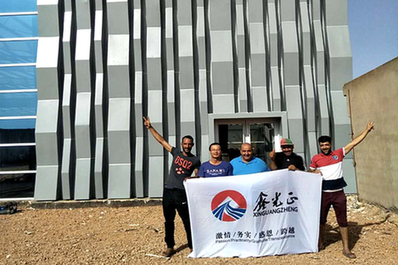
XINGUANGZHENG was established in 1997 and has experience across factories, warehouses, cold storage, offices, commercial buildings, hangars, sports facilities, and agricultural structures. Our teams integrate design, production, installation support, and after-sales service.
For overseas buyers, a clear project brief is the best starting point. Share the project country, building use, main dimensions, site conditions, functional requirements, and expected supply boundary.
FAQ
Q: What should buyers check before ordering a prefabricated steel structure?
A: Confirm the project brief, site conditions, design responsibilities, approved drawings, material scope, quality records, delivery boundary, installation support, exclusions, and change procedures before production release.
Q: What documents should be approved before fabrication of prefabricated steel buildings?
A: The exact package depends on the project, but the drawing set, technical specifications, material-related records, quality records, and commercial scope should be aligned before fabrication.
Q: What does a turnkey steel structure solution include?
A: There is no universal scope. Buyers should confirm whether design, fabrication, transport, installation assistance, foundations, local works, permits, and utilities are included.
Q: What should be confirmed before assembling a steel frame building after delivery?
A: You must check the latest building blueprints and part labels. Verify the truck unloading plan, holding zone, and lifting machines. Do not forget to clarify regional worker duties, field safety setups, and factory help limits.
Q: Do prefabricated steel buildings use the same codes and certifications in every country?
A: No. Codes, approval procedures, certification needs, and professional sign-off can vary by destination and project type. Confirm local requirements with the responsible engineer, consultant, or authority before final approval.