Procuring industrial facilities from international manufacturers requires meticulous preparation and clear technical communication. When project managers begin their cross-border steel building procurement, submitting a vague inquiry often leads to inaccurate pricing, multiple design revisions, and extended negotiation cycles. Providing a comprehensive steel building document package early eliminates guesswork, ensures regulatory compliance, and accelerates the entire project timeline. This guide outlines the essential files and parameters you must prepare before contacting PEB steel structure suppliers for an accurate quote.
The Hidden Risks of an Incomplete Steel Building RFQ
Why Accurate Documents Prevent Cost Overruns
Contacting metal building suppliers without exact details usually brings rough price guesses. You do not get firm manufacturing contracts. Sometimes, environmental loads or inside space needs are missing from the first inquiry. When this happens, engineers must make safe guesses to ensure structural safety. Over-engineering directly leads to heavier steel frames. It also causes higher material costs. Also, you might find out about missing parts like air systems or crane brackets during the making phase. This discovery will cause costly change orders. Sending a correct overseas steel supplier quote request locks in your budget. It stops sudden money problems later.
Navigating Cross-Border Communication Gaps
International construction involves navigating different industrial standards, measurement systems, and engineering terminologies. A verbal description of a warehouse layout is highly subjective and easily misinterpreted across different languages. By relying on a standardized document checklist, buyers and manufacturers establish a common technical language from day one. Clear layout drawings and written structural specifications leave no room for interpretation, ensuring that the overseas factory produces exactly what the local site requires.
Core Document Package for PEB Steel Structure Suppliers
Architectural Concept and Layout Drawings
The foundation of any successful inquiry is a clear visual representation of the intended structure. You do not need finalized shop drawings at this stage, but basic architectural layouts are mandatory. Your preliminary submission should indicate:
- Overall dimensional requirements including exact length, width, and eave height.
- Interior bay spacing and structural column placement preferences.
- Dedicated functional zones, partition walls, and office mezzanine locations.
Providing these preliminary sketches allows the engineering team to determine the most efficient portal frame configuration for your facility.
Local Load Parameters (Wind, Snow, Seismic Data)
Structural integrity relies entirely on accurate environmental data. A building designed for a tropical climate will fail under heavy snowfall, while a structure in an active seismic zone requires specialized moment connections. Your inquiry must include the maximum wind speed, ground snow load, and seismic zone classification for your specific geographic location.
Comparison of Load Impacts:
- Standard Wind Load environments require standard column profiles and basic bracing.
- Hurricane Wind Load environments demand reinforced box columns, heavier Q355B steel materials, and high-density roof fastening systems to prevent uplift.
Specific Building Code Certifications
Different countries enforce unique regulatory frameworks for imported construction materials. Before fabrication begins, the factory must know which regional standards apply to your project. For example, exporting structural materials to the Eurasian Union market requires EAC Certification for Steel Structure Production. By clearly stating your destination country and required compliance codes in your brief, you ensure that the manufacturer assigns the correct quality control protocols and documentation for smooth customs clearance.
Customization Specs (Doors, Cranes, Insulation)
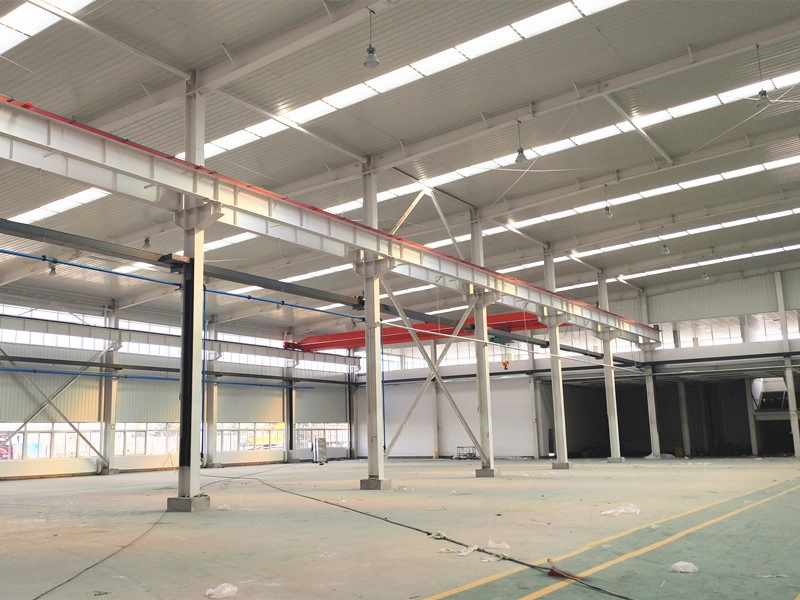
Industrial facilities are rarely empty shells. The inclusion of heavy equipment and specialized access points drastically alters the structural calculations. Your checklist should detail the exact positions and sizes of all roller doors, loading docks, and personnel exits. If your operation requires lifting equipment, you must specify the crane capacity, lifting height, and operating span.
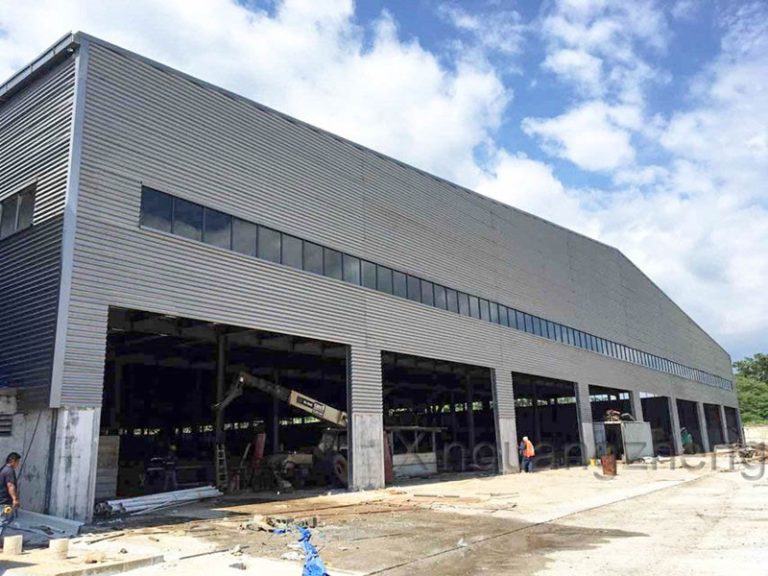
Case Study Application: XINGUANGZHENG team designed a paint shop in Thailand. The project details showed a 160-meter by 55-meter building. The client clearly asked for four sets of five-ton overhead cranes in their first package. Because of this, the engineering group properly strengthened the portal steel frame. They added the needed runway beams without slowing down the making schedule.
.webp "Steel Building RFQ Document Checklist for Cross-Border Projects插图1")
Defining Scope of Supply vs. Local Responsibilities
Material Supply vs. Installation Support
A major point of confusion in international procurement is assuming the manufacturer will handle every aspect of construction. Most cross-border contracts focus strictly on material fabrication and delivery. The supplier designs the frame, cuts the steel, applies the anti-corrosion painting, and packs the components into shipping containers. While professional manufacturers can dispatch technical advisors to your site for installation guidance, the actual physical labor, heavy lifting equipment, and day-to-day site management remain the responsibility of your local contractor.
Shipping and Logistics Terms (FOB vs. CIF)
Your document package should state your preferred commercial terms for international shipping. Choosing FOB means the manufacturer is only responsible for transporting the goods to the agreed departure port. Selecting CIF means the factory handles the ocean freight and shipping insurance all the way to your destination port. Clarifying this requirement early ensures the freight costs are accurately reflected in the final proposal.
Foundation and Civil Works Exclusions
Steel fabricators design the metal superstructure, but they do not design the concrete foundation.
Scope Allocation Breakdown:
Phase 1: Anchor Bolt Reaction Forces Calculation – Handled by the Steel Supplier.
Phase 2: Site Soil Testing and Geotechnical Report – Handled by the Local Buyer.
Phase 3: Concrete Foundation Design – Handled by the Local Civil Engineer.
Phase 4: Anchor Bolt Embedding and Concrete Pouring – Handled by the Local Contractor.
The manufacturer will supply the required anchor bolts and the reaction force data based on the building loads, but your local engineer must design the concrete footings based on local soil conditions.
Why Choose XINGUANGZHENG for Your Overseas Project
-1.webp "Steel Building RFQ Document Checklist for Cross-Border Projects插图2")
Comprehensive One-Stop Engineering Support
Executing a large-scale industrial project requires a reliable partner with proven global capabilities. Founded in 1997, XINGUANGZHENG has developed into an international enterprise integrating research, design, production, and after-sales service. With over twenty-nine years of industry experience, we have successfully exported construction projects to more than one hundred countries across six continents. Operating six production plants with seven structural steel production lines, two purlin lines, and two plate lines, the facility handles complex international orders with ease. A dedicated team of over one hundred senior technical personnel ensures that your specific requirements are met perfectly. From disassembling your initial drawings to planning delivery and assisting with site installation, XINGUANGZHENG provides a seamless one-stop service for your entire project lifecycle.
Transparent Quotation and Fabrication Process
Trust is paramount when dealing with cross-border manufacturing. To guarantee precision and efficiency, XINGUANGZHENG utilizes an advanced production digitalization system. This manufacturing execution platform covers everything from contract management and production scheduling to quality control and logistics. By integrating building information modeling visualization and smart device technology, the factory maintains strict oversight over every steel column and roof panel. This digital approach ensures that your structural components are fabricated exactly to the approved specifications, providing a highly transparent and reliable procurement experience from the initial quote to final delivery.
Frequently Asked Questions (FAQ)
Q: What are the mandatory steel building RFQ documents needed for a preliminary quote?
A: To receive an accurate preliminary quote, buyers must provide basic architectural layouts, local environmental load data (such as wind and snow loads), intended building usage, and any specific dimensional requirements. Providing a comprehensive steel building document package early eliminates guesswork and speeds up the estimation process.
Q: How do overseas metal building suppliers handle local building codes?
A: Professional PEB steel structure suppliers design the building according to the parameters and local code requirements you provide in your RFQ. It is the buyer’s responsibility to consult a local engineer to confirm the required compliance standards before sending the brief across borders.
Q: Should my cross-border steel building procurement include foundation designs?
A: Typically, steel building suppliers provide the anchor bolt reaction forces and layout plans, but the actual foundation design must be completed by a local civil engineer based on your specific site’s soil report. Your RFQ should clearly exclude foundation works from the steel supplier’s scope.
Q: How long does it take for PEB steel structure suppliers to process an RFQ?
A: If your steel building RFQ documents are complete and well-organized, an experienced supplier like XINGUANGZHENG can usually provide a detailed preliminary proposal and 3D concept within a few working days. Missing load parameters or vague customization specs are the main causes of delays.
Q: Can XINGUANGZHENG update the steel building document package if project requirements change?
A: Yes. Throughout the cross-border steel building procurement process, XINGUANGZHENG offers continuous engineering support. If your local regulations or site conditions change, our technical team will revise the shop drawings and adjust the quotation transparently before final fabrication begins.