Introduction: The FOB Price Trap in Overseas Steel Building Procurement
Why the Lowest Quote Isn’t Always the Cheapest
Many global buyers fall into the trap of focusing solely on the FOB (Free On Board) price when importing pre-engineered commercial or industrial buildings. The factory quote covers only the basic material costs, often obscuring the true Total Cost of Ownership (TCO). Unexpected logistical barriers, postponed site assembly, and regional compliance changes can swiftly double the starting budget. Assessing the full spending from production to ultimate erection holds the key to guaranteeing a rewarding and smooth project completion.
Part 1: Demystifying the Direct Material Costs
Primary Framing
The core load-bearing frame makes up a large part of the basic structural steel fabrication budget. Primary framing generally covers tough H-shaped steel columns and beams that set the general stability of the facility. Aspects shaping this basic involve the precise steel grade demanded, the full span of the warehouse, and the top eaves height.
Secondary Framing and Cladding Systems
Secondary parts back the outer covering and add to the structural strength. This group covers C-section or Z-section roof and wall purlins, tie rods, and bracing pieces that shift loads to the primary framework. The cladding system handles the roof and wall panels, where choices go from simple single-skin corrugated sheets to top polyurethane sandwich panels that deliver better thermal performance.
Doors, Windows, and Accessories
Practical extras fitted to certain industrial uses likewise affect the starting quotation. Accessories hold industrial roll-up doors, sturdy ventilation turbines, daylighting boards, and combined drainage systems like galvanized steel gutters and PVC downspouts. When the facility calls for overhead lifting features, adding crane beams able to hold set tonnages will change the material basis more.
Part 2: The Hidden Shipping and Logistics Costs
Weight vs. Volume: The Container Loading Challenge
Transporting oversized steel components overseas involves complex logistics, particularly regarding the weight-to-volume ratio. Standard shipping containers stick to firm size limits, so oddly shaped structural members can use up useful space without hitting max payload capacity. Poor loading brings the need for more shipping containers, pushing up ocean freight costs rapidly.
How Smart Nesting Saves Shipping Fees
Sophisticated packing plans use smart nesting software to make the most of each cubic meter in the shipping container. Fabricators nest smaller purlins and secondary components within the flanges of large H-beams, significantly reducing the total shipping volume. This planned setup cuts the full container number and notably cuts down international travel fees.
Import Duties, Tariffs, and Port Fees
Once reaching the target port, imported prefabricated buildings face local customs rules. Purchasers have to set aside money for exact import tariffs drawn from the harmonized system codes set for construction materials and structural steel. Extra port handling costs, storage fees, customs checks, and land transport to the end construction site need to be included in the financial plan.
Part 3: On-Site Execution: Foundation and Erection Variables
Site Prep, Concrete Pouring, and Anchor Bolts
Site groundwork and foundation setup always go to local contractors and mark a big local spending. Comprehensive geotechnical soil testing is essential to determine the required depth and reinforcement for concrete foundations. The exact placement of anchor bolts before the concrete sets holds importance because these parts work as the main link points for the imported steel columns.
Heavy Equipment Rental and Local Labor Rates
The erection stage calls for certain mechanical tools and trained staff. Putting together heavy structural parts requires renting mobile cranes, scissor lifts, and scaffolding, which commonly bring high daily local charges. The skill of the local assembly group shapes the construction timeline straight, as drawn-out schedules turn into rising labor costs.
The Cost of Inaccuracy: Why Pre-assembly Matters
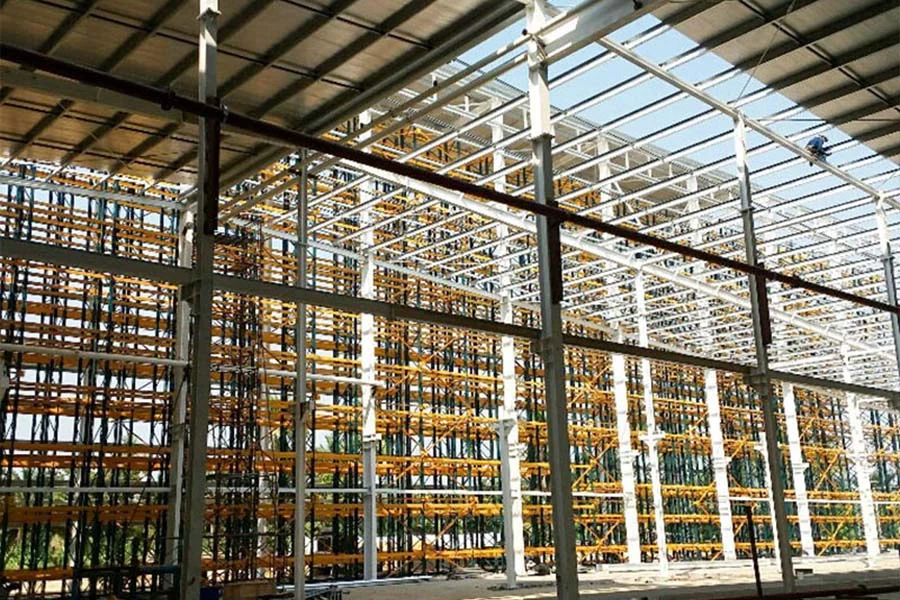
Production flaws found during on-site assembly spark huge budget excesses. When bolt holes fail to match or structural joints refuse to join, the local group has to do changes, cutting, and welding on site. Getting prefabricated parts from producers that carry out tight factory pre-assembly checks makes sure all pieces join smoothly, stopping high local fix costs.
Part 4: Local Compliance, Permits, and Engineering Certifications
Designing for Local Weather: Wind Load and Snow Load
Standard building patterns cannot apply everywhere without changes for the area’s weather strains. Facilities built in coastal spots must get engineering to handle strong wind loads, while facilities in chillier areas need denser steel shapes to bear heavy snow buildup. These fitted structural figures shape the full steel tonnage needed for the project directly.
Professional Engineer Stamping and Permit Fees
City building offices require strict safety checks before giving out construction permits. Imported design plans often get reviewed and stamped by a locally licensed professional engineer to confirm compliance with the following area building codes. Costs tied to this local engineering are okay, and the next city permitting steps count as sure hidden outlays.
Part 5: Maximizing Lifecycle ROI with XINGUANGZHENG
Anti-Corrosion Insulation for Long-Term Savings
Guarding the structural frame from environmental wear holds importance for boosting the building’s operational lifespan. Modern surface treatment picks, such as hot-dip galvanizing and silver spray painting get used to fight rust in moist or coastal settings. Moving to dense water-rejecting rock wool sandwich panels cuts thermal transfer a good deal, making sure strong energy performance and dropping long-run climate control costs.
Advanced 3D BIM Detailing to Eliminate On-Site Errors
Sharp production works as the top way for handling the total cost of ownership in the erection stage. XINGUANGZHENG employs a broad production digitizing setup linked with a Building Information Modeling display to watch the whole manufacturing line from contract handling to logistics. This tech base runs smart gear such as laser plate cutting machines, profile marking machines, and welding robots to lock in full-size correctness, fully wiping out pricey on-site changes.
CE/ISO Certified Manufacturing for Hassle-Free Customs
Dealing with global regulatory setups needs a provider with spotless production papers. We utilize a comprehensive production digitalization system integrated with Building Information Modeling visualization to oversee the entire manufacturing chain from contract management to logistics. This technological infrastructure drives intelligent equipment, including laser plate cutting machines, profile marking machines, and welding robots, to ensure absolute dimensional accuracy, completely eliminating costly on-site modifications.
Conclusion: Get a Transparent Estimate Today
Contact Our Engineering Team for a Custom Quote
Grasping the real money range of the next commercial facility means checking past the plain material list. Through weighing logistics, local work, and lifecycle toughness, backers can form wise procurement calls. Connect with XINGUANGZHENG technical design group using project sizes to get a full and clear review that covers each construction step.
FAQs
Q: How much does a 10,000 sq ft prefab steel warehouse cost?
A: There is no reliable universal price for a 10,000 sq ft prefab steel warehouse. The result depends on steel grade, panel systems, environmental loads, shipping, permits, foundations, erection and the agreed supply scope. Prepare those inputs and contact us to get more information.
Q: Can I install an imported prefab steel building without a specialized local construction team?
A: You will still need a general contractor or a capable assembly crew to manage the project. High-quality prefab steel buildings are pre-cut, pre-drilled, and pre-welded at the factory to act like a large-scale erector set. While a specialized fabrication crew is not required on-site, you will need access to heavy lifting equipment and a skilled local assembly team.
Q: What certifications are required to import steel structure buildings from China?
A: To ensure compliance and smooth customs clearance, the manufacturer should hold internationally recognized certifications such as ISO 9001 for quality management. For the European market, CE certification is mandatory, while North American projects typically require adherence to AISC standards. Always verify that your supplier can provide the necessary material test reports for your local authorities.
Q: How long do galvanized steel structures last in high-humidity or coastal areas?
A: When properly treated, these structures can last fifty years or more, even in harsh environments. For coastal regions or high-humidity applications, it is crucial to specify hot-dip galvanizing with an appropriate coating thickness rather than standard anti-rust paint. Upgrading to advanced anti-corrosion wall panels also extends the lifespan significantly.
Q: How are prefab steel buildings packed and shipped to minimize freight costs?
A: Shipping large steel components requires strategic logistics to control transit budgets. Professional manufacturers use 3D nesting software to optimize the packing of columns, beams, and panels into standard shipping containers. By carefully balancing the weight-to-volume ratio and packing smaller components inside larger framing pieces, the freight cost can be significantly reduced.
Warehouse Project Information to Prepare Before Requesting a Quote
A useful steel warehouse proposal starts with a clear project brief. Prepare the project country and site, building use, length, width and clear height, applicable wind, snow and seismic requirements, and any crane, mezzanine, racking, door or loading-bay needs. Also identify the required wall and roof system, delivery destination, target schedule, and which work will be handled by your local contractor.
Review our industrial steel structure projects, understand our design and fabrication services, browse completed steel structure projects, or send your warehouse requirements for an initial review.